
Latest Articles
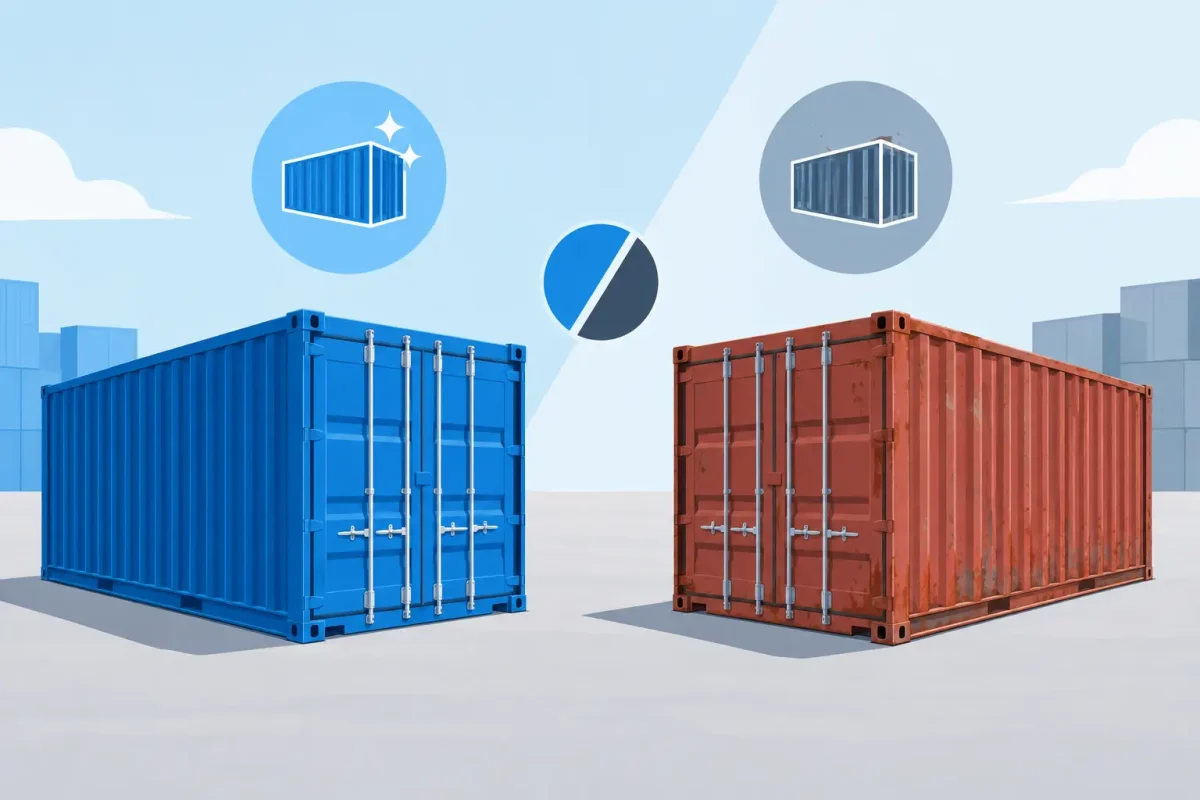
New Versus Used Containers for Your Project
Oct
A container that looks inexpensive on a listing can become costly if it arrives with dents in the wrong place, doors that are hard to operate, or a condition grade that does not match the job. When comparing new versus used containers, the right choice is less about buying the newest box and more about buying the condition, size, and structural quality your project actually requires.
For a backyard storage unit, a construction site, a retail conversion, or a container home, the decision comes down to budget, appearance, expected service life, and how much modification work is planned. A clearly graded container lets you make that decision without guessing.
What “New” Usually Means in Shipping Containers
A new shipping container is commonly called a one-trip container. It is built overseas, loaded once with cargo, and then made available for sale in the United States. It is not factory-perfect in the way a new car is factory-perfect. It has made an ocean voyage, been lifted by cranes, stacked, and handled through ports. Small scratches, scuffs, and minor handling marks are normal.
Still, one-trip units are the closest option to new. They typically have clean interiors, newer door seals, solid flooring, minimal exterior wear, and a more uniform appearance. For buyers who care about curb appeal or want the longest practical service life, that condition has real value.
One-trip containers are often the best fit for visible residential storage, customer-facing businesses, polished office builds, and projects where the container will receive only limited exterior finishing. They also give fabricators a cleaner starting point when adding windows, walk-through doors, electrical systems, insulation, or interior walls.
What “Used” Can Mean
Used does not describe one single condition. Freight containers can spend years moving cargo through ports, rail yards, highways, and storage depots. Their exterior may show surface rust, repaired areas, previous markings, dents, and paint fading. Those signs do not automatically make a container a poor purchase.
The grade matters more than the word used. Two common categories are cargo-worthy and wind-and-water-tight, often shortened to WWT.
A cargo-worthy container is generally suitable for international freight use when it meets the required inspection and certification standards. Buyers who expect to ship a container loaded with goods should confirm current certification requirements before booking transport, since documentation and acceptance rules can vary by carrier and route.
A WWT container is intended to keep wind and water out. It is a practical option for ground-level storage, tools, equipment, farm supplies, and many job-site uses. It may have more cosmetic wear or repairs than a one-trip unit, but it should provide dry, secure storage when honestly graded.
New Versus Used Containers: The Cost Question
Used containers usually cost less upfront, especially in common 20-foot and 40-foot sizes. That price difference can free up budget for delivery, site preparation, shelving, electrical work, paint, or a custom modification. If the container will sit behind a warehouse, on a working farm, or inside a fenced construction site, paying a premium for a cleaner exterior may not improve the outcome.
A one-trip container costs more because it has experienced far less wear and generally needs less cosmetic or maintenance attention at the start. The higher purchase price can make sense when the unit is in a prominent location or will become part of a finished structure. A clean shell may reduce prep work before painting or cladding, although every conversion still needs proper planning.
The lowest purchase price is not always the lowest project cost. For example, a heavily used unit could be an excellent storage solution, but it may require additional surface preparation before a high-end retail build. On the other hand, buying a one-trip unit for basic landscaping-equipment storage may mean paying for appearance you do not need.
Condition Matters More Than Age Alone
A container’s age tells only part of the story. How it was handled, repaired, maintained, and graded matters more. A used unit with sound doors, a solid roof, a dry interior, and a structurally serviceable frame can deliver years of useful storage. A newer unit can still have dents or exterior scuffs from normal transport.
Ask practical questions before you buy. Is the container wind and water tight? Are the doors operational? Is the floor suitable for the intended load? Is the unit cargo-worthy if shipping is part of the plan? Are cosmetic dents acceptable for the location? Clear answers are more useful than vague promises that a container is “in good shape.”
For container homes, offices, pools, retail shops, and other modifications, it is also smart to discuss the planned cuts and loads before selecting a unit. Cutting large openings for doors or windows changes how forces travel through the container. A qualified fabricator or project professional can determine where reinforcement is needed.
Appearance and Placement Change the Decision
Think about who will see the container every day. A used WWT container can be a strong, economical choice behind a commercial building or on private land where function comes first. Minor dents, color variation, and old shipping labels may not matter at all.
For a front-yard storage solution, a short-term rental property, a retail kiosk, or an office near customers, one-trip condition often provides a more polished starting point. It can still be painted or wrapped, but less visible wear means fewer compromises if the finish is simple.
Local rules also matter. Some homeowners associations, municipalities, and commercial property managers have requirements for screening, color, setbacks, or permitted uses. Check those requirements before delivery, particularly if the container will be visible from a street or used as an occupied space.
Size Can Affect Value as Much as Condition
Do not decide condition before deciding footprint. A 10-foot container works well where access is tight or storage needs are modest. A 20-foot container is a popular balance of capacity and placement flexibility. A 40-foot unit provides substantial space per linear foot, while a 40-foot high-cube adds roughly an extra foot of interior height for bulky storage or conversion projects.
A used 40-foot unit may offer more useful storage for the money than a new 20-foot container, but only if your site can receive it. Delivery trucks need a clear approach, and the driver needs room to unload. Soft ground, overhead lines, narrow gates, tight turns, and sloped sites can all affect what size is practical.
The container should rest on stable, level support points that keep its corner castings properly supported. A site does not always need a full concrete slab, but it does need a prepared base appropriate for the ground conditions and intended use.
When a Used Container Is the Smarter Buy
Choose a used cargo-worthy or WWT container when secure, dry storage matters more than appearance, when the unit will be painted or extensively modified, or when keeping initial cost low is a priority. Used units are especially practical for construction materials, tools, inventory overflow, agricultural supplies, and equipment storage.
They also work well for buyers who understand that industrial equipment can show its working history. The key is matching the grade to the job. A transparent condition description helps you avoid paying for cargo-worthy certification when you only need WWT storage, or accepting a cosmetic condition that will not suit a visible project.
When a One-Trip Container Is Worth It
Choose a one-trip container when presentation, clean interior condition, and long-term ownership matter. It is often a strong fit for container offices, customer-facing commercial spaces, residential projects, and conversions where starting with less wear can simplify the build.
It is also a sensible choice for buyers who want a container that looks newer from day one without investing immediately in paint and repairs. That does not mean it is automatically the best choice. The premium should serve a real project need, not just a preference for the word new.
Buy the Grade That Supports the Job
The best container is the one that arrives honestly graded, fits the site, and performs the task without adding unnecessary cost. At Mega Containers USA, that starts with clear condition categories, straightforward pricing, and delivery planning that accounts for your location and project goals.
Before placing an order, define what must be true on delivery: the size must fit, the condition must match the use, the truck must have access, and the support area must be ready. Once those details are settled, choosing between new and used becomes a practical business decision rather than a gamble.
