
Latest Articles
20 Foot Container Dimensions and What Fits
Sep
A 20-foot shipping container is often the practical middle ground: large enough for serious storage, compact enough for many residential lots, job sites, and commercial properties. Understanding 20 foot container dimensions before you order helps prevent the two most common problems: buying more container than the site can handle, or discovering that the item you need to store will not clear the doors.
Standard 20 Foot Container Dimensions
A standard dry 20-foot container is built to ISO shipping standards. Its advertised size is based on the exterior footprint, not the usable room inside.
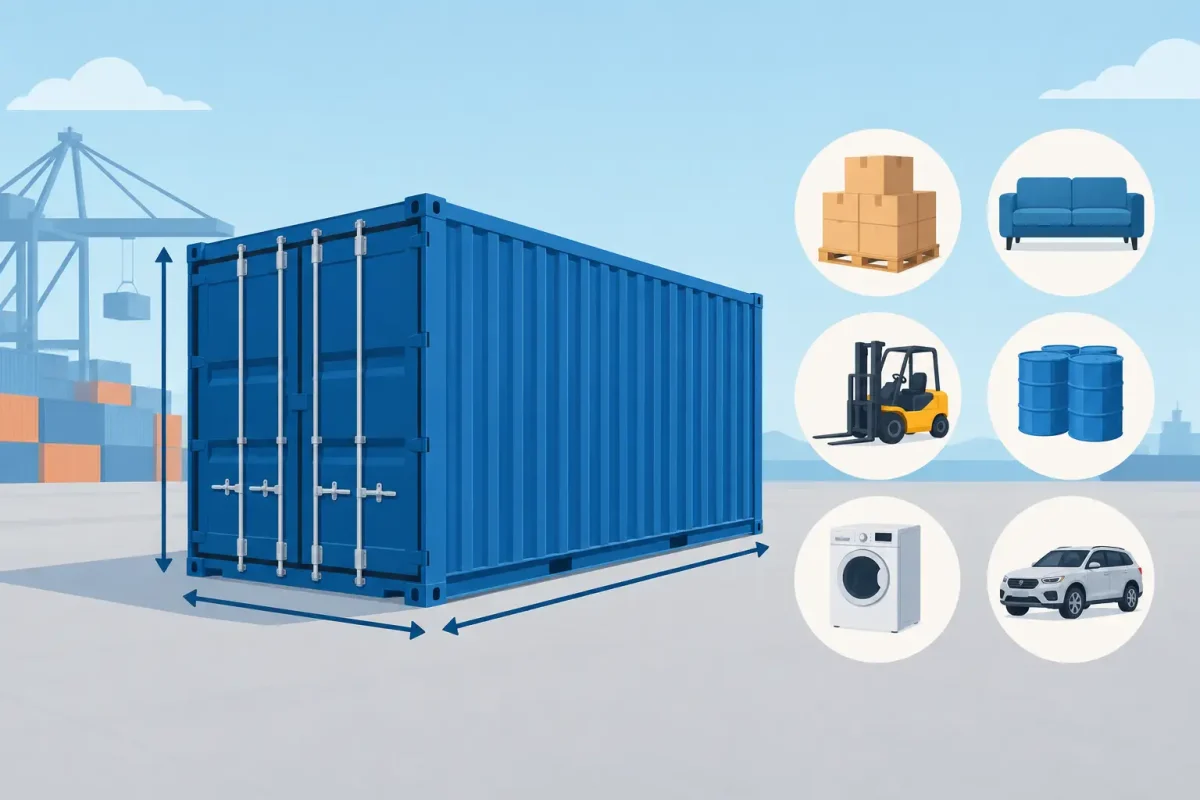
The standard external dimensions are 20 feet long, 8 feet wide, and 8 feet 6 inches high. In metric terms, that is approximately 6.06 meters long, 2.44 meters wide, and 2.59 meters high.
That creates an exterior footprint of about 160 square feet. For comparison, it occupies roughly the same ground area as a single-car garage, although its rectangular shape and full-height steel walls make the interior much more efficient for stacked storage.
Inside, a typical 20-foot standard-height container provides approximately 19 feet 4 inches of length, 7 feet 8 inches of width, and 7 feet 10 inches of height. The interior volume is usually around 1,165 cubic feet.
Those interior measurements can vary slightly by manufacturer, container age, floor construction, wall corrugation, and door design. If a piece of equipment, shelving system, vehicle, or prefabricated assembly needs a tight fit, plan from the specific unit dimensions rather than relying only on industry averages.
Door Opening Dimensions Matter More Than Many Buyers Expect
The container may be nearly 20 feet long inside, but everything has to get through the cargo doors. A standard 20-foot container door opening is typically about 7 feet 8 inches wide and 7 feet 5 inches high.
That difference matters when storing a side-by-side, compact tractor, palletized equipment, tall commercial shelving, or a large crate. An item can fit inside on paper but still be too wide or too tall to enter. Measure the item at its widest and tallest point, including mirrors, handles, wheels, lift attachments, packaging, and pallet height.
What Can Fit in a 20-Foot Container?
A 20-foot container is a strong choice for secure storage without committing to the footprint of a 40-foot unit. It is commonly used for contractor tools, lawn and landscape equipment, household storage, inventory, construction materials, agricultural supplies, and machinery parts.
For household use, a 20-foot container can generally hold the contents of a small apartment or several rooms of a house when packed well. That does not mean every move is the same. Bulky furniture can consume space quickly, while boxed goods and stackable items make much better use of the container’s height.
For business storage, the usable layout depends on access as much as capacity. If employees need to retrieve inventory regularly, leave a center aisle and place frequently used items close to the doors. If the container will be loaded once and opened occasionally, you can use more of the full interior volume with racking, pallets, or stacked materials.
A standard unit can usually accommodate up to 10 standard pallets when loaded efficiently, though pallet size, loading direction, and access requirements affect the actual count. If you need frequent forklift access or a working aisle, capacity will be lower.
Weight Limits for a 20-Foot Shipping Container
Dimensions tell you how much space you have. Weight ratings tell you how much cargo the container can safely carry during transport.
Most standard 20-foot ISO containers have a maximum gross weight of about 67,200 pounds. Gross weight includes the container itself plus its contents. The empty container, called the tare weight, is often around 4,850 pounds, leaving a maximum payload near 62,350 pounds.
These figures are common industry standards, but the data plate on the container is the final authority. Check it before loading dense materials such as steel, stone, tile, engine components, bagged concrete, or liquid-filled equipment.
Weight distribution also matters. Do not place all heavy material at the front, rear, or one side of the container. Spread the load across the floor and secure it properly. An overloaded or unbalanced container can create problems during lifting, transport, unloading, and long-term placement.
For stationary ground storage, your site and foundation must also carry the load. A container filled with heavy materials can weigh far more than many buyers expect. Soft ground, poor drainage, and undersized support points can lead to settling, twisted door frames, and difficulty opening the doors.
Standard Height vs. 20-Foot High Cube
The standard-height model is 8 feet 6 inches tall externally. A 20-foot high-cube container has the same 20-foot length and 8-foot width, but adds one foot of exterior height.
A high-cube unit is typically 9 feet 6 inches high outside and offers approximately 8 feet 10 inches of interior height. That additional vertical room is useful for tall shelving, stacked inventory, oversized equipment, workshop layouts, and modifications that need ceiling space for insulation, wiring, lighting, or HVAC.
The trade-off is availability and delivery planning. Standard 20-foot containers are widely available and are often the simplest choice for basic storage. High-cube units may cost more and need extra clearance around overhead branches, utility lines, gates, carports, and building eaves.
If you are converting a container into an office, retail space, cabin, or other finished structure, that extra foot can make the interior feel noticeably less confined after insulation and finish materials are installed. For simple equipment storage, a standard-height unit may be the more cost-effective fit.
Plan for Delivery Space, Not Just Container Space
The container dimensions are only one part of site planning. Delivery equipment needs room to enter, maneuver, and unload safely.
A 20-foot container is commonly delivered on a tilt-bed truck. The truck needs a reasonably straight approach, firm ground, and overhead clearance. The container slides off the rear as the truck bed raises, so the full unloading area can be much longer than 20 feet.
As a practical starting point, plan for roughly 70 to 80 feet of clear, straight space for a typical tilt-bed delivery. Exact requirements depend on the truck, container orientation, access route, slope, turns, ground conditions, and obstacles. Low branches, power lines, narrow gates, soft soil, drainage ditches, and tight corners should be addressed before scheduling delivery.
The doors are normally positioned at the rear for unloading, but door orientation should be confirmed when you order. Think about how you will access the container after placement. Doors facing a fence, slope, retaining wall, or parked equipment can turn a good storage solution into a daily inconvenience.
For long-term use, support the container on a level, well-drained base. Railroad ties, concrete blocks, gravel pads, and engineered foundations can all be appropriate depending on local conditions and the intended use. The key is supporting the corner castings and keeping the frame level enough for the cargo doors to operate correctly.
Choosing the Right Container Condition
The outside dimensions of a 20-foot container do not change with condition grade, but the best grade depends on what you plan to do with it.
A one-trip container is typically the cleanest option, with minimal prior use and a newer appearance. It is often preferred for visible residential installations, retail projects, finished conversions, and buyers who want the best starting condition.
Cargo-worthy containers are structurally suitable for international shipping, making them a practical option when strength and transport certification are priorities. Wind-and-water-tight, or WWT, containers are designed to keep rain and wind out, making them a cost-conscious choice for ground-level storage. Used units can show dents, surface rust, repairs, and cosmetic wear, but that does not automatically affect their usefulness for tools, materials, or equipment.
For a container office, home, shop, or other modification, ask about wall condition, floor condition, door operation, and any planned cutouts. For basic storage, honest grading and a properly working, weather-resistant unit usually matter more than a perfect exterior finish.
Get the Fit Right Before It Arrives
A 20-foot container gives you meaningful storage capacity in a manageable footprint, but successful placement starts with accurate measurements. Measure your site, access route, gate openings, overhead clearance, and the items that need to pass through the doors. Then account for the delivery truck and the foundation or support plan.
Mega Containers USA can help match the container size, condition grade, and delivery arrangement to the way you will actually use the space. A few measurements taken before ordering can save a difficult relocation after delivery and make your container useful from day one.
