
Latest Articles
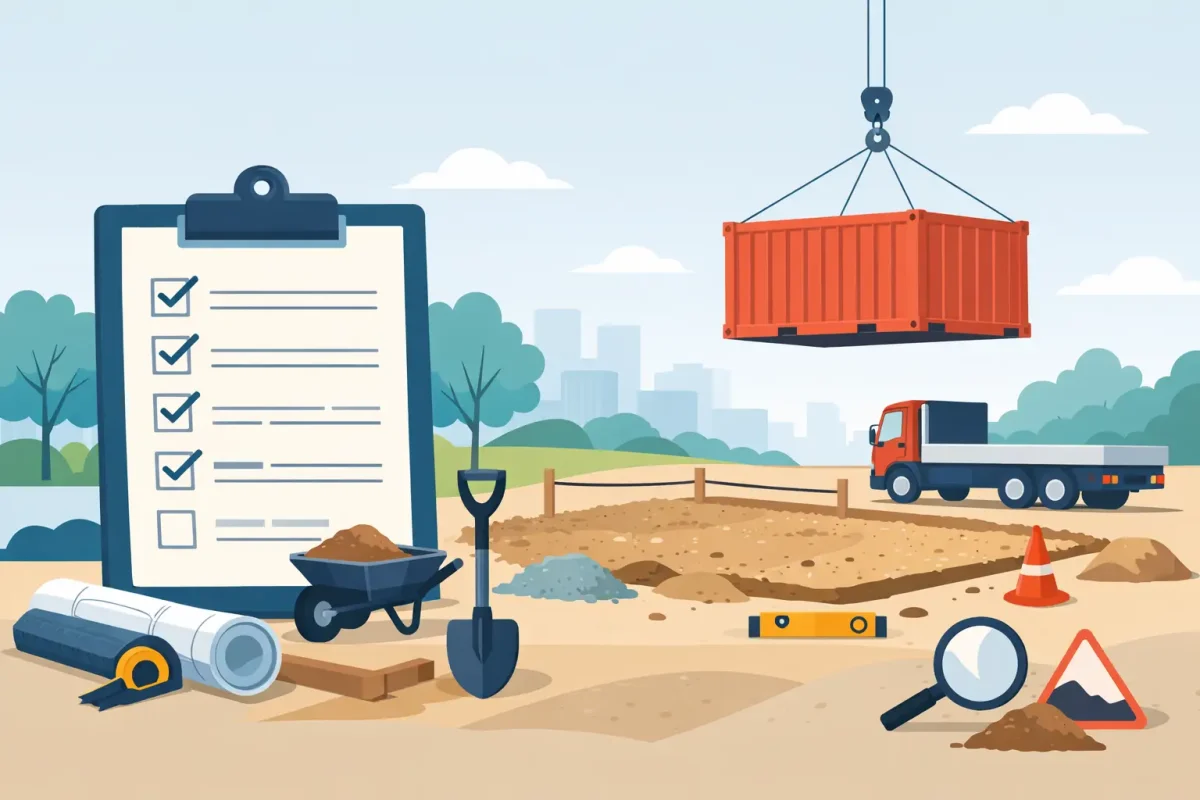
Shipping Container Delivery Site Prep Checklist
Sep
A shipping container can arrive ready for work, storage, or conversion, but getting it onto your property is not as simple as dropping off a package. The container, delivery truck, and unloading method all need room to operate safely. A few minutes spent planning access and placement before ordering can prevent a failed delivery, unexpected charges, or a container sitting somewhere you did not intend.
Whether you are buying a 10-foot unit for residential storage, a 20-foot container for a job site, or a 40-foot high-cube for a larger build, delivery planning should be part of the purchase decision. The right container is only useful when it can reach the site and sit on stable ground.
What Shipping Container Delivery Typically Includes
Most standard shipping container delivery is arranged using a tilt-bed truck. The truck backs toward the planned placement area, raises its bed, and allows the container to slide down onto the ground. This is a practical option for many homes, farms, businesses, and construction sites, but it requires more than a space equal to the container’s footprint.
A 20-foot container needs roughly 60 feet of straight clearance for a tilt-bed delivery. A 40-foot container often requires 100 feet or more, depending on the truck, terrain, and final placement. The driver needs enough room to pull forward, line up, raise the bed, and unload without striking trees, buildings, gates, power lines, or parked equipment.
Some projects require a different method. A chassis delivery may be appropriate when a crane or forklift will unload the container. A side-loader truck can place a container beside the vehicle in certain situations, although this also needs significant side clearance and firm, level ground. The best method depends on the container size, site layout, and whether you need precise placement.
Delivery arrangements should be confirmed before the truck is dispatched. A clear discussion of access, terrain, obstructions, and placement expectations helps match the truck to the job.
Measure Site Access Before You Order
The most common delivery issue is not the container itself. It is the route from the public road to the placement area. Walk or drive the route with the delivery vehicle in mind, not a personal pickup truck.
Start at the entrance. Check gate width, driveway turns, bridge limits, overhead branches, and utility lines. A standard container is approximately 8 feet wide, but the delivery truck is wider and longer. Tight turns that work for cars may not work for a tractor-trailer or tilt-bed truck.
Vertical clearance matters just as much. The container sits high on the truck, and the raised tilt bed creates additional height during unloading. Low tree limbs, hanging wires, roof overhangs, and entry arches can stop a delivery. Trim branches well before the scheduled date, and do not assume a driver can work around utility lines. Power lines are a serious safety concern and must have adequate clearance.
Pay attention to the surface beneath the truck as well. Soft grass, loose gravel, steep driveways, muddy construction sites, and recently graded soil can leave a heavy truck without the traction or stability needed to unload. After rain, a site that appeared accessible during a walkthrough may be unsuitable for delivery.
Before confirming the order, review these four practical details:
- The delivery route has adequate width, turning room, and overhead clearance.
- The truck can reach the final placement area without crossing soft or unstable ground.
- There is enough straight space for the unloading method being used.
- The placement location is free of vehicles, materials, people, and overhead hazards.
Photos and simple site measurements are often enough to identify concerns early. If your property has a narrow entrance, a sharp turn, a sloped lot, or limited room behind a building, share those details when requesting a quote or scheduling delivery.
Prepare a Level, Stable Container Pad
Shipping containers are engineered to carry heavy loads through their corner castings. Those corner fittings are the intended support points when a container is placed on land. The ground beneath them should be level, compacted, and able to support the container’s weight plus whatever you plan to store or build inside.
For basic storage, many customers use compacted gravel with concrete blocks, railroad ties rated for the application, or purpose-built concrete footings beneath the four corners. A container office, retail space, pool, cabin, or container home may require a more formal foundation based on local code, soil conditions, drainage, and engineering requirements.
The goal is not always a concrete slab. It is stable, even support that keeps the container from twisting or settling. An unlevel container can make cargo doors difficult to operate, affect drainage, and create problems during a future modification. Even a wind-and-water-tight container needs good site preparation to remain practical over time.
Plan for drainage around the pad. Water should move away from the container rather than collecting under it. Keeping the unit slightly raised also promotes airflow below the floor and gives you better access for inspection.
Choose Placement With the Doors in Mind
It is easy to focus on where the container will fit and forget how it will function once it is there. Before delivery, decide which direction the cargo doors should face. Consider the path for vehicles, forklifts, wheelbarrows, customers, or employees using the container.
If you are using a container for equipment storage, face the doors toward the driveway or work area. For a job-site office, consider the entry path, windows, utility connections, and visibility across the site. For a retail kiosk or modular structure, orientation may also affect customer access, shade, parking, and local compliance.
A tilt-bed truck normally places the container with one end unloading first, so the desired door direction must be discussed in advance. Moving a container after delivery is possible, but it requires equipment and adds cost. Clear placement instructions before dispatch are simpler and more economical.
Mark the four corners of the planned location if the site is open or if several structures are nearby. Temporary stakes, cones, or clearly visible markers can help the driver understand exactly where you want the unit, provided they do not create a hazard during unloading.
Know What to Expect on Delivery Day
Have a responsible adult or site representative available when the truck arrives. That person should know the agreed placement location and be able to make decisions if conditions have changed. Keep children, pets, workers, and vehicles away from the unloading zone.
The driver will assess the route and site conditions before unloading. This is a safety check, not a delay tactic. If the ground is too soft, the overhead clearance is inadequate, or the truck cannot safely position for the drop, delivery may need to be rescheduled. Forcing an unload in unsafe conditions can damage the container, truck, driveway, utility lines, or surrounding property.
Once placed, inspect the container before the driver leaves. Confirm the unit is in the agreed location, the doors open and close properly, and the condition matches the grade ordered. One-trip containers generally offer a cleaner appearance and minimal prior use. Cargo-worthy units are suitable for international shipping standards, while wind-and-water-tight containers are a practical choice for secure storage when cosmetic wear is acceptable. Honest grading helps you know what to expect, but delivery-day inspection gives you confidence in the unit on your property.
Understand Delivery Costs and Variables
Container delivery pricing is influenced by distance, container size, local availability, truck type, access conditions, and the complexity of placement. A straightforward drop on level, accessible ground is typically simpler than delivery through a tight residential neighborhood, remote property, active construction site, or restricted commercial lot.
Requesting a precise site placement, using specialized unloading equipment, waiting for a blocked site to clear, or making a second trip after a failed delivery can affect the final cost. Transparent delivery planning protects your budget because it identifies those variables before the truck is on the road.
Do not choose a container size solely by purchase price. A 40-foot container provides substantial storage and can be cost-effective per square foot, but it needs more access and unloading room than a 10-foot or 20-foot unit. On constrained sites, the smaller container may be the better operational choice.
Get Advice Before Scheduling
A good supplier should ask practical questions about your site rather than treating delivery as an afterthought. At Mega Containers USA, container specialists can help buyers match container size, grade, and delivery requirements to the project before scheduling is finalized.
Bring basic information to that conversation: the delivery address, gate and driveway measurements, photos of access points, planned placement area, surface conditions, and known overhead obstacles. If you need a container placed on a foundation, beside an existing structure, or within a tight work zone, say so early.
A container is built to handle demanding work. Give the delivery crew a clear path, stable ground, and an accurate placement plan, and your new space can be ready to use as soon as the truck pulls away.
