
Latest Articles
How to Buy Steel Containers Without Costly Mistakes
Oct
A steel container can be a quick answer to a storage problem, a job-site office, or the starting point for a larger build. But knowing how to buy steel containers means looking beyond the first price you see. The right unit must fit your use, your property, and the delivery equipment that will place it.
A 20-foot container that is perfect for secure tool storage may be the wrong choice for a retail kiosk. A low-priced used unit may be a smart buy for farm equipment storage, while a one-trip container makes more sense for a visible property or a finished conversion. Start with the job the container needs to do, then match the size, grade, and delivery plan to that job.
How to Buy Steel Containers for Your Actual Use
Before comparing listings, define what will go inside the container and how often people will access it. Storage, freight transport, construction operations, and conversions place very different demands on a container.
For simple equipment, material, or seasonal storage, a wind-and-water-tight unit is often enough. It is designed to keep out rain and wind, though it may show dents, patches, surface rust, and cosmetic wear from its working life. If appearance matters less than function, this can be the most cost-effective route.
If the container will move loaded cargo by rail, truck, or ship, ask for a cargo-worthy unit. Cargo-worthy containers meet the structural standards generally required for international shipping and can be certified for transport when needed. Do not assume every used container has this status. Wind-and-water-tight and cargo-worthy describe different levels of suitability.
For a business entrance, customer-facing retail space, high-end storage, or a project where you want a cleaner starting point, consider a new or one-trip container. One-trip containers have typically made a single loaded journey from the manufacturer. They are not flawless, but they are usually cleaner, straighter, and less weathered than older used inventory.
A conversion changes the decision further. Container homes, offices, pool projects, cabins, and shops may need high-cube height, specific door placement, electrical work, insulation, windows, HVAC openings, or engineering review. Buying the cheapest box first and solving those requirements later can raise the total project cost.
Choose the Right Size Before You Request a Quote
Standard shipping containers are commonly available in 10-foot, 20-foot, and 40-foot lengths. A standard 20-foot container provides a practical footprint for tools, inventory, and compact work areas. A 40-foot unit gives substantially more floor space and is often the better value per square foot when the site and delivery route can accommodate it.
Height matters as much as length. Standard containers are generally about 8 feet 6 inches tall externally. High-cube containers are roughly one foot taller, which can make a real difference for shelving, tall equipment, finished ceilings, or a workspace where people will spend time inside.
Measure the area where the container will sit, but do not stop at the pad. Consider the approach road, gate width, turns, overhead branches, utility lines, and the space required for the delivery truck to maneuver. A 40-foot container may fit on paper while being impractical to deliver through a narrow residential drive.
Also plan around the doors. Most containers have cargo doors at one end. If you need frequent access to items stored at the far end, either organize the interior around that limitation or consider modifications such as additional personnel doors, roll-up doors, or side openings. Those features are useful, but they add cost and should be specified before purchase.
Understand Container Grades Without Guesswork
Condition grades are where first-time buyers can lose time and money. Ask for the grade in plain language and make sure the description matches the use case.
A new container is generally factory-built and unused for cargo service. A one-trip container has made one cargo voyage and is often the closest practical option to new. Both are strong choices when finish, odor, floor condition, and long-term appearance matter.
A cargo-worthy container is structurally suitable for freight use and may have an active or obtainable inspection certification, depending on the transaction. It can still have dents, repairs, and visible wear. Cargo-worthy does not mean new-looking.
A wind-and-water-tight, or WWT, container is intended to provide dry, secure storage. It should have working doors, a weather-resistant shell, and a floor suitable for ordinary storage. It is a functional grade, not a cosmetic promise. Expect signs of prior service.
Used containers can vary substantially even within the same grade. Ask about door operation, floor condition, major repairs, roof condition, and whether the unit has any strong odors or previous cargo residue. Honest grading is more valuable than a vague claim that a container is in good condition.
Compare the Full Price, Not Just the Container Price
The container price is only one part of the purchase. A straightforward quote should identify the unit grade, size, delivery location, delivery method, and any applicable taxes or modifications. If a number seems unusually low, confirm what is and is not included before making a decision.
Freight cost depends on distance from available inventory, container size, fuel conditions, route access, and the equipment needed for placement. A unit delivered near a major container depot may cost less to transport than the same unit sent to a remote rural site. Inventory availability can also affect both price and lead time.
It is worth comparing options by total delivered cost. For example, a less expensive 40-foot used container located farther away may cost more overall than a slightly higher-priced 40-foot container that can be delivered from nearby inventory. The same logic applies when comparing a standard-height unit with a high-cube unit.
If you are purchasing for a commercial project, account for the costs after delivery as well. Site work, anchors, insulation, electrical service, ventilation, ramps, interior framing, permits, and paint can quickly exceed the price difference between two container grades. Buy the condition that reduces the work you truly need to do.
Prepare Your Site Before the Truck Arrives
Containers are designed to sit on their corner castings, but the ground beneath them must be firm and reasonably level. A poorly prepared site can cause doors to bind, allow water to collect below the unit, and make future relocation more difficult.
For many storage applications, a compacted gravel pad with appropriate support points is a practical solution. Concrete piers, blocks designed for the load, or a full concrete pad may be better for permanent installations, container offices, homes, or sites with soft soil. Local requirements and the planned use should guide the final foundation choice.
Before delivery, confirm these four operational details:
- The truck has a clear route from the public road to the placement area.
- Trees, wires, gates, and structures provide enough clearance for the truck and container.
- The ground is stable enough for delivery equipment and the finished container load.
- The container orientation is marked so the doors face the direction you need.
Many deliveries use a tilt-bed truck. This method needs room in front of the placement location because the container slides off the truck as the bed raises. A tight site may require a different delivery method, such as a crane or specialized equipment. Discuss access early, not after the container is already scheduled.
Inspect the Details That Affect Daily Use
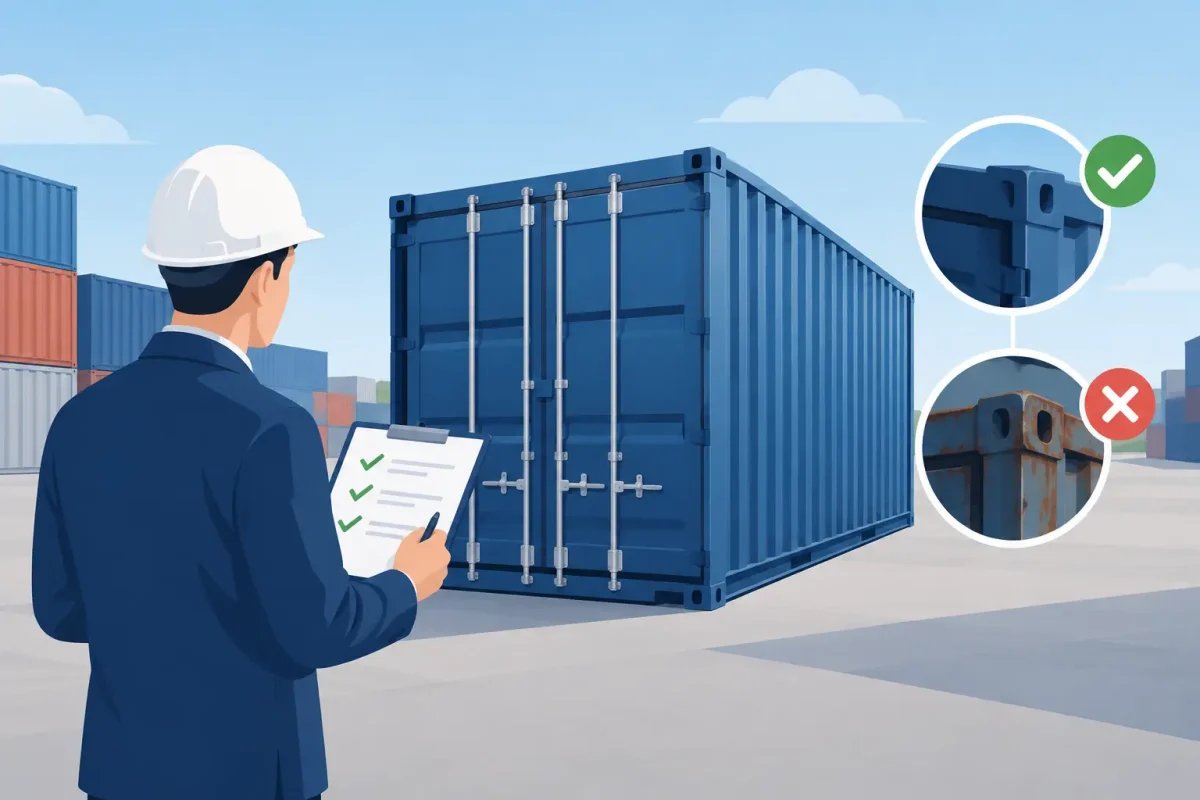
Even when a supplier clearly states the grade, inspect or document the important details before accepting delivery. Open and close both cargo doors. They should engage properly without requiring excessive force. Check the door seals, locking gear, and lockbox if one is included.
Inside, look at the floor for soft spots, severe damage, oil contamination, or conditions that do not suit your intended use. Most container floors are durable wood, but prior cargo history matters for food storage, living spaces, workshops, and any project involving children or pets.
Look at the roofline and interior ceiling for evidence of leaks. Minor exterior rust can be normal on a used unit, particularly around welds and corners. Rust that has compromised the steel is a different issue. If you plan to cut openings for windows or doors, factor in reinforcement and professional fabrication rather than treating the container shell as ordinary sheet metal.
Buy From a Supplier That Makes the Process Clear
A reliable supplier should be able to explain the difference between available grades, recommend a realistic size, provide transparent pricing, and help you plan delivery. You should know whether you are buying a specific condition category, what delivery arrangement is proposed, and who to contact if site questions come up.
Mega Containers USA helps buyers move from product selection to site delivery with clear container categories and practical guidance. Whether you need a basic WWT storage unit or a container-based structure, the right purchase begins with clear expectations rather than assumptions.
The best container is not always the newest or the least expensive. It is the one that arrives in the stated condition, fits the space you prepared, and gives your project room to work from day one.
